By Ju-min Park, Trevor Hunnicutt and Tim Kelly
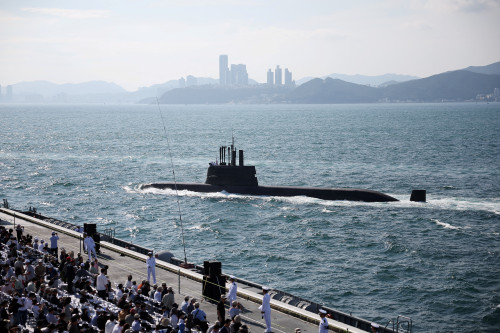
SEOUL/WASHINGTON/TOKYO, Dec 5 (Reuters) – South Korea’s pursuit of nuclear-powered submarines is gaining traction following President Donald Trump’s endorsement, ending decades of U.S. resistance in a move that could reshape Asia’s security landscape and escalate an underwater arms race.
Seoul has long sought to join the elite group of nations operating nuclear submarines to counter North Korea. Trump’s approval removed a key barrier by granting access to fuel under a nuclear agreement between the countries.
Still, South Korea’s rapidly developing programme could irk China and pressure Japan to develop similar capabilities, analysts and former military officials say.
“Submarines are highly effective attack systems. An arms race in the region is inevitable,” said Choi Il, a retired South Korean Navy submarine captain.
Seoul argues nuclear propulsion is crucial to counter North Korea’s undersea threats, including submarine-launched ballistic missiles. It has repeatedly said it will not acquire nuclear weapons and respects the non-proliferation regime.
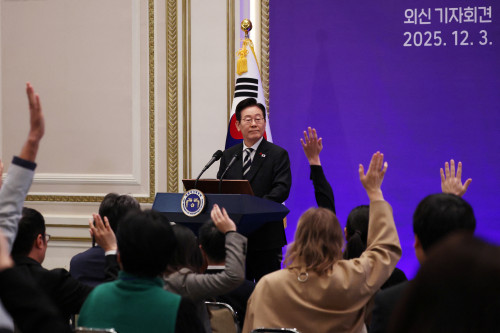
South Korean President Lee Jae Myung on Wednesday described the deal as a major achievement from his meeting with Trump and said it would enhance security flexibility and defence autonomy.
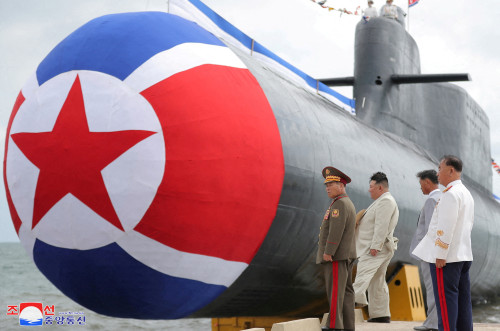
North Korea claims to be developing similar capabilities, with state media showing leader Kim Jong Un inspecting what it said was a nuclear-powered submarine in March.
How advanced its programme is remains uncertain, but some analysts suspect Pyongyang is receiving Russian assistance, a possibility that South Korea’s military has said it is closely monitoring. Russia and North Korea have said they are beefing up defence cooperation, but have not provided details on technical cooperation on defence.
COUNTERING CHINA
South Korean lawmaker and defence expert Yu Yong-weon said, since nuclear-powered submarines are faster and can remain underwater far longer than diesel-powered equivalents, they would enhance monitoring of North Korean submarines.
Seoul’s acquisition could also push Japan to rethink its stance, Yu said.
Tokyo was shocked to learn about Trump’s support for Seoul’s programme, figuring Japan would be ahead of South Korea were the U.S. to back such an ambition in the region, according to a person briefed on government discussions.
Japan’s Defence Ministry declined to comment. Defence Minister Shinjiro Koizumi recently said that shifting to nuclear propulsion was an option, though the ministry said no studies were currently underway. A Japanese official said if Tokyo does pursue nuclear submarines, it will ask the U.S. for the necessary help.
Japan’s smaller diesel submarines suit shallow waters, but nuclear submarines could extend operations into the Pacific and pave the way for a future second-strike capability, said a Tokyo-based naval expert, who like other sources, requested anonymity due to the issue’s sensitivity.
South Korea’s ambitions align with U.S. objectives to counter China’s military influence. U.S. Chief of Naval Operations Admiral Daryl Caudle described China as a “pacing threat” and said recently in Seoul he anticipates South Korea’s nuclear submarines playing a future role in regional deterrence.
NORTH KOREA WARNS OF “NUCLEAR DOMINO”
China’s reaction to Seoul’s plans has been muted, but Washington-based think tank 38 North warned that could rapidly change.
President Lee assured Chinese President Xi Jinping last month the submarines would be defensive and to deter North Korea, according to Wi Sung-lac, South Korea’s national security adviser.
“Other countries may not welcome this, but we have our position. We can explain and persuade,” Wi said.
North Korean state media warned that Seoul’s submarine plan could trigger a “nuclear domino” effect.
Cheong Seong-chang of the Sejong Institute, a think tank, suggested Japan and South Korea might jointly develop nuclear submarines with U.S. help, aligning with Washington’s regional security interests.
A LONG-STANDING DREAM?
Only the U.S., Russia, China, France, India and the United Kingdom currently possess nuclear-powered submarines. Australia has plans to develop a fleet with help from the U.S. and Britain under the 2021 AUKUS agreement.
South Korea first explored the idea in 1994 during a crisis over North Korea’s nuclear programme, but technical challenges stalled progress, the Sejong Institute said.
In 2017, then President Moon Jae-in sought Trump’s backing for nuclear submarines, which he privately gave, according to two sources with knowledge of the matter. However, opposition from some U.S. officials blocked concrete support, the sources said.
Former Vice Foreign Minister Choi Jong Kun, who served under Moon, said U.S. departments such as defence and energy had expressed nuclear proliferation concerns.
‘TRAIN IS ALREADY MOVING’
Despite setbacks, South Korea has advanced independently, developing basic submarine designs, said retired navy colonel Moon Keun-sik, citing military sources.
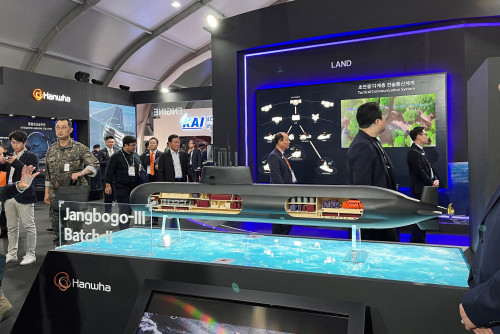
Defence Minister Ahn Gyu-back said reactor assembly was at a “significant” stage and estimated Seoul could build a vessel within 10 years, with at least four 5,000-tonne nuclear subs needed.
A joint U.S.-South Korean fact sheet published on November 14 indicated Washington had agreed to cooperate on sourcing nuclear fuel.
“Rather than calling it approval (from the U.S.), we can say that we had already prepared the conditions to build nuclear-powered submarines and that fuel was the final piece we needed,” Ahn told parliament.
South Korea is “continuously acquiring” technologies related to construction of its nuclear-powered submarines, the defence ministry told Reuters.
“In that process, we will continue our efforts to enhance the perfection of the technologies, including safety,” it said, noting it would cooperate with the U.S.
America supports South Korea’s ambition “to increase burden sharing and deter threats to our alliance, including by developing nuclear-powered attack submarines,” a White House official said.
Australia’s AUKUS deal helped lower the barriers for Seoul, said former Vice Foreign Minister Choi.
“The train is already moving, with a door left open, meaning we need more things to be done, but it is on the way.”
(Reporting by Ju-min Park and Joyce Lee in Seoul, Trevor Hunnicutt in Washington and Tim Kelly in Tokyo; Editing by Ed Davies and Lincoln Feast)