By Toby Sterling
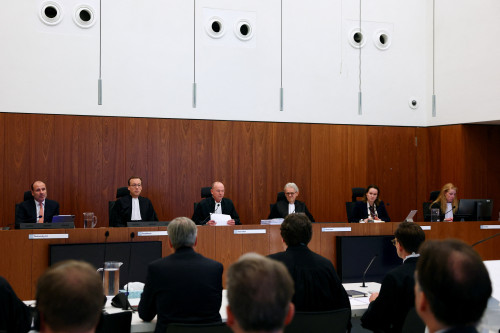
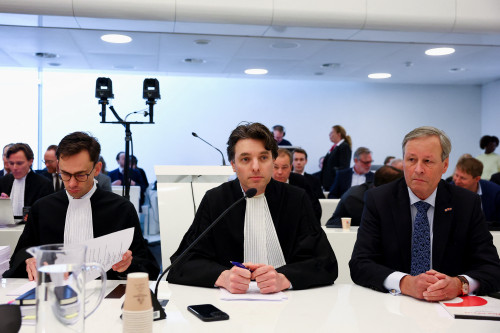
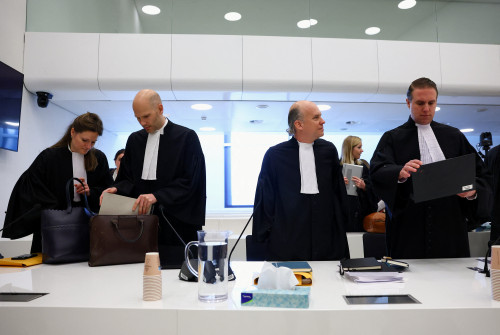
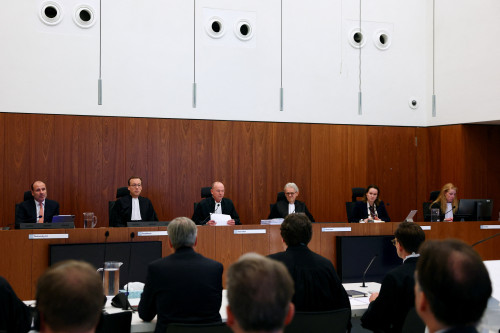
AMSTERDAM, Jan 14 (Reuters) – Lawyers for Dutch chipmaker Nexperia and Chinese owner Wingtech fought for control of Nexperia in an Amsterdam court on Wednesday in a dispute that has led to a shortage of chips used by carmakers.
At stake is whether the court will order a full investigation into allegations of mismanagement under Nexperia’s previous CEO, Wingtech founder Zhang Xuezheng, and whether the Chinese company’s control over Nexperia should be restored.
Nexperia’s ability to operate has been hamstrung by the dispute, with the company’s European production arm and its Chinese packaging and distribution unit unable to cooperate.
EX-NEXPERIA CEO WILLING TO CONSIDER GOVERNANCE CHANGES
“Wingtech is doing everything it can to destabilize Nexperia in this already challenging situation,” lawyer Jeroen van der Schrieck told the hearing at the Amsterdam Enterprise Court.
He said Wingtech had invited the Chinese government to impose export restrictions on Nexperia in October, damaging the company and its customers.
Dirk-Jan Duynstee, a lawyer for Wingtech, said Zhang had been looking at alternatives to avoid Nexperia being placed on a U.S. blacklist and was willing to consider governance changes if needed.
The dispute at Nexperia broke out on September 30 when the Dutch government seized control of the company, citing fears it was transferring operations and intellectual property to China. The government later revoked the move.
On October 7, the court ruled in a preliminary decision there were “well-founded reasons to doubt” the company was being managed correctly, suspended Zhang as CEO and ordered control of Wingtech’s shares transferred to a Dutch lawyer.
Lawyers for Wingtech said no evidence was produced to show Nexperia’s property had been misappropriated, or that there were any plans to do so, raising questions of whether the Dutch government’s intervention had been necessary.
WINGTECH SAYS NEXPERIA NEEDS CHINA
Nexperia “is a largely non-Dutch group that cannot function without its non-Dutch parent and subsidiary entities,” Duynstee told the court.
He denied that Zhang had any conflict of interest due to his ownership of a factory in Shanghai that sold wafers to Nexperia, one of the court’s reasons in ordering preliminary measures.
Zhang did not appear in person, but his lawyer pointed to his track record as an entrepreneur and said he felt betrayed by the Dutch state and court actions.
A lawyer for the Dutch state said it supported Nexperia’s current management.
The U.S., Dutch and Chinese governments all imposed and later retracted measures affecting Nexperia in 2025, citing strategic interests but harming carmakers.
Nexperia, which made $331 million in profit on $2.06 billion in sales in 2024, is now in danger of breaking into two companies as its customers scramble for alternative chip suppliers.
The Dutch company stopped shipping wafers to China in October, citing nonpayment, and it now plans to spend $260 million to increase packaging capacity in Malaysia to supply non-Chinese customers.
Its packaging subsidiary in Dongguan has rebranded itself “Nexperia China” and plans to replace European production with Chinese alternatives.
The court-appointed lawyer who currently holds Nexperia’s shares urged the court to rule quickly, saying he believes after a December 18 discussion that Nexperia and Wingtech may be delaying negotiations over a resolution until their legal position is clearer.
(Reporting by Toby Sterling; Editing by Emelia Sithole-Matarise)