Target’s turnaround is real. The question is whether the engine powering it can sustain what the stock already reflects.
Same-store sales rose 5.6% in the first quarter of fiscal 2026, the retailer’s first increase in that metric in five quarters. Net sales grew 6.7% year over year, with traffic up 4.4% and digital comparable sales climbing 8.9%, while non-merchandise sales grew nearly 25% and gross margin reached 29%.
Target improved its adjusted operating margin to 4.5% from 3.7%, but the adjusted SG&A expense rate crept higher, from 21.7% to 21.9%. Spending is outpacing sales, which matters more as the easy comparisons fade.
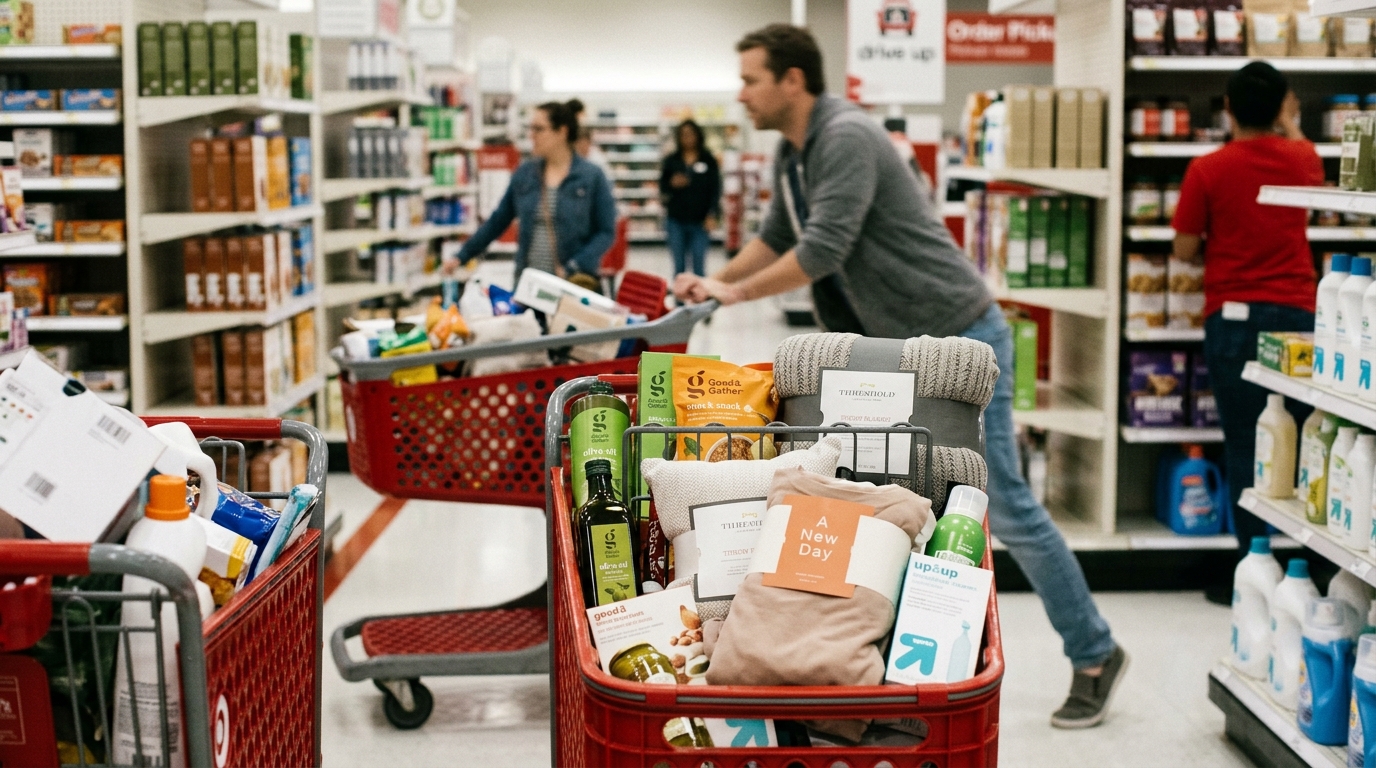
The private label push is central to CEO Michael Fiddelke’s turnaround story. Target says it has a lineup of more than 40 owned brands that generate more than $30 billion annually in revenue. At the value end, the February 2024 launch of dealworthy, a low-price owned brand with items starting at less than $1, is part of the push to win back budget-focused shoppers.
Private labels carry structurally better margins than national brands, which is the whole thesis. But the acceleration in same-day delivery, the other pillar of the value pitch, costs money to run. Same-day services, including Drive Up, Order Pickup and same-day delivery, generated more than $14 billion in sales in fiscal 2025 and accounted for about two-thirds of digital sales. The paid Target Circle 360 tier includes same-day delivery, free two-day shipping, and early access to select sales events, and the company has said its membership count has the potential to more than triple over the next three years. Scaling that benefit to three times as many members is not free.
Amid rising inflation and tariffs, consumers are extremely price-sensitive, with a survey showing about 71% want retailers to lower prices. Target is reading that correctly. The retailer has expanded its selection of low-priced toys and is keeping school supplies starting at less than $1, with thousands of items priced under $20. The assortment is sharper. The value signal is clearer than it’s been in years.
What traders should watch: with the stock’s recovery already well advanced, another sales beat may not be enough. The central test is profitability. Management expects the full-year operating margin to exceed the 2025 adjusted rate of 4.6% by more than 20 basis points, a low bar given the revenue momentum. If Q2 gross margin holds at or above 29% while SG&A stabilizes, the bull case firms up. If delivery expansion keeps eating into the efficiency gains from private label, the stock’s 2026 rally will look like it ran ahead of the earnings recovery rather than alongside it.