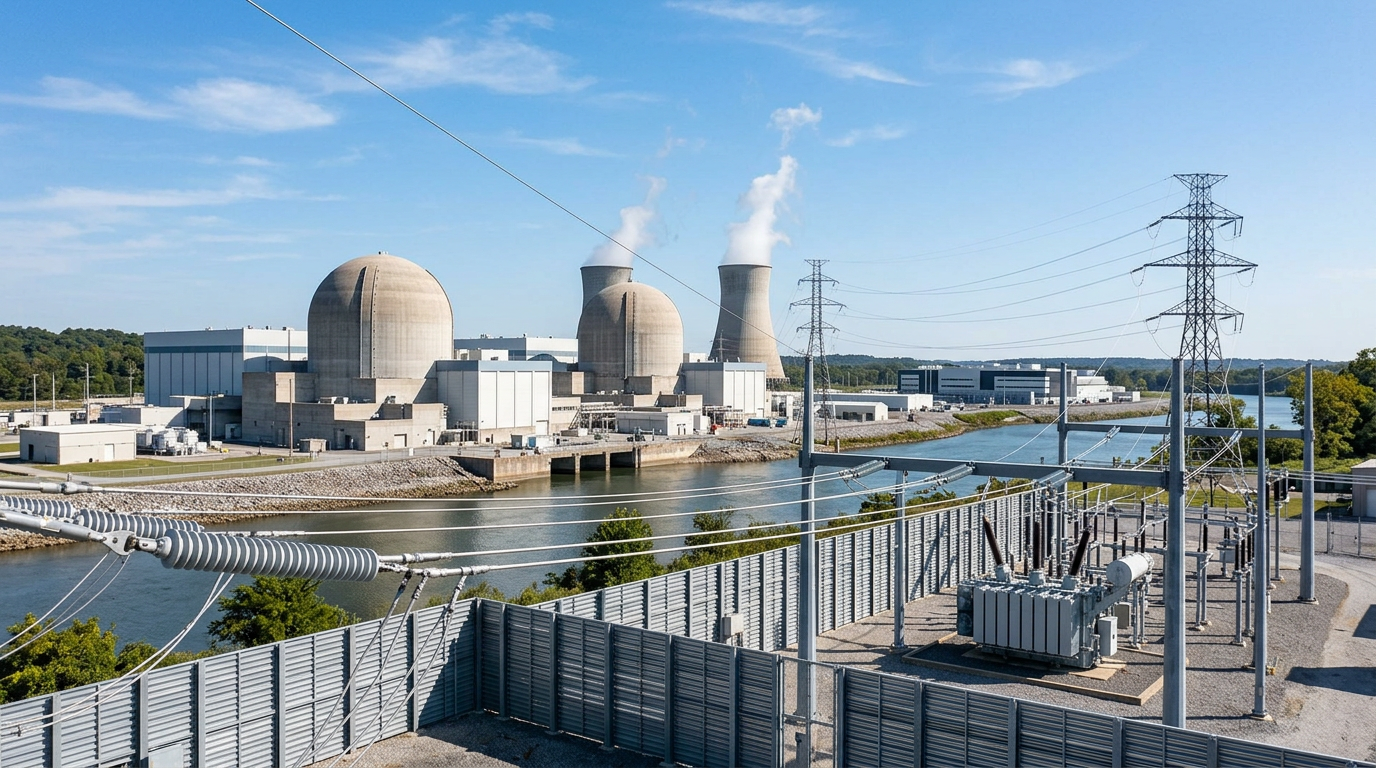
There’s an odd thing happening with Constellation Energy. The company is signing the kind of long-term, premium-priced power contracts most utilities only dream about, and the stock is down year to date. The market is having a hard time holding both of those facts at the same time.
What’s actually going on is a collision between near-term execution noise and a structural story that is, if anything, getting stronger by the quarter.
Analyst Targets
- Scotiabank: Price target $441
- UBS: Price target $388
- Raymond James: Outperform, price target $392
- Barclays: Price target $358
- KeyBanc: Price target $321
- Mizuho: Neutral, price target $300
- Analyst consensus: Average price target approximately $293–$368 across coverage, Wall Street implying roughly 40% upside from current levels per TIKR data
Company Profile
Constellation Energy is the largest private-sector power producer and the nation’s largest producer of clean, reliable energy. After completing its acquisition of Calpine on January 7, 2026, the combined company now operates with about 55 gigawatts of capacity spanning nuclear, natural gas, geothermal, hydro, wind, and solar. Around 90% of Constellation’s output is carbon-free, which is what makes it uniquely positioned for the hyperscaler land grab in clean power. The company serves approximately 2.5 million customer accounts, including 80% of the Fortune 100.
The Numbers
- Q1 2026 Adjusted EPS: $2.74
- 2026 EPS Guidance: $11.00–$12.00 per share (affirmed)
- Share Buyback Authorization: Previously stated here as $5B (not verified in available primary sources)
- Dividend: $0.4265 quarterly; for the most recently declared dividend, the ex-date was May 15, 2026 and the pay date was June 5, 2026
- Recent Equity Offering: $3.09B follow-on completed June 2026 (not verified via company primary filings in this review)
- 52-Week Range: $243 to $413
Why the Stock Is Struggling
The March 31 business outlook conference is where sentiment broke. Management guided 2026 adjusted operating EPS to $11.00–$12.00 per share. Add in Calpine integration costs and some delays on transmission projects that could affect the Three Mile Island restart timeline, and the stock dropped 8% in a single session. Multiple analysts cut price targets that week.
Then in June, CEG completed a follow-on equity offering. Dilution always stings in the short term. What that capital is being deployed into is a different conversation.
The stock has traded in a range roughly between $243 and $413 over the past year. Right now it sits near the lower half of that band, which is where the valuation argument gets interesting.
The AI Power Thesis
This is where the long-term story diverges sharply from the short-term price action.
AI data centers have a fundamental power problem. Renewables can’t provide the 24/7 baseload that hyperscale computing demands. Natural gas works, but it carries carbon liability. Nuclear checks every box: carbon-free, firm, continuous, and scalable through uprates rather than new builds. Constellation has the largest nuclear fleet in the United States. No one else is even close.
The contract wins reflect that. CEG has locked in long-term agreements with Microsoft and Meta. The Crane Clean Energy Center (Three Mile Island Unit 1) restart, backed by a 20-year Microsoft PPA, is targeted for 2027. Meta has a 20-year agreement starting in 2027 tied to the Clinton Clean Energy Center in Illinois.
On the demand side, PJM’s forecast has indicated summer peak usage climbing by about 70 gigawatts over the next 15 years.
Bull / Base / Bear
Bull: Hyperscaler contract acceleration pushes CEG’s contracted megawatts well beyond current levels. The Crane Clean Energy Center restart arrives on schedule by 2027, adding firm nuclear capacity at a moment of peak demand. 2027 base EPS guidance looks conservative if data center power purchase agreements that aren’t yet in official guidance start flowing through. Wall Street implies roughly 40% upside to consensus price targets from current levels.
Base: Calpine integration lands roughly as expected, and CEG executes on nuclear uprates through 2027. The stock gradually re-rates higher as hyperscaler contract megawatts accumulate. Dividend growth of 10% annually continues, offering income support in the meantime.
Bear: Transmission delays push back the Three Mile Island restart further than expected. Integration costs from the Calpine deal compress near-term margins. A broader utility de-rating driven by rising bond yields pressures the multiple. Nuclear O&M costs accelerate on an aging fleet.
Technical Overlay
CEG is trading within its 52-week range of $243 to $413, sitting in the lower portion of that band following the March sell-off and subsequent equity offering. The stock has not fully recovered to pre-March levels. The pattern suggests a stock that’s digesting dilution and guidance disappointment simultaneously. A move back above the $330–$360 range would be the first signal of meaningful recovery. Sustained strength above $390 would bring the upper 52-week zone back into view.
What to Watch
- New hyperscaler power purchase agreement announcements — additional contracts beyond Microsoft and Meta
- Crane Clean Energy Center restart timeline and any FERC/DOE updates
- Nuclear uprate progress and completion milestones
- Q2 2026 earnings — first full quarter post-Calpine integration at scale
- Natural gas pricing — CEG’s Calpine assets add gas exposure, which cuts both ways
- 2027 base EPS guidance revision if data center PPAs not yet in estimates begin flowing through
Bottom Line
Constellation Energy is in an awkward position that long-term investors often encounter: the business is arguably stronger than it’s ever been, and the stock is near its lows. The Calpine deal materially expanded its generation platform. The nuclear fleet is irreplaceable. The hyperscaler contracts are real, long-term, and premium-priced. What’s weighing on the stock is integration noise, a guidance number that missed by a little, and dilution from an equity raise that’s funding exactly the growth investors say they want. Whether the next 12 months close that gap depends almost entirely on execution, not the demand story. The demand story is already settled.
For informational purposes only.