September’s auto sales numbers landed Thursday, and they split cleanly into two stories. One is about a carmaker growing on its own terms. The other is about an industry leaning harder on discounts to move metal.
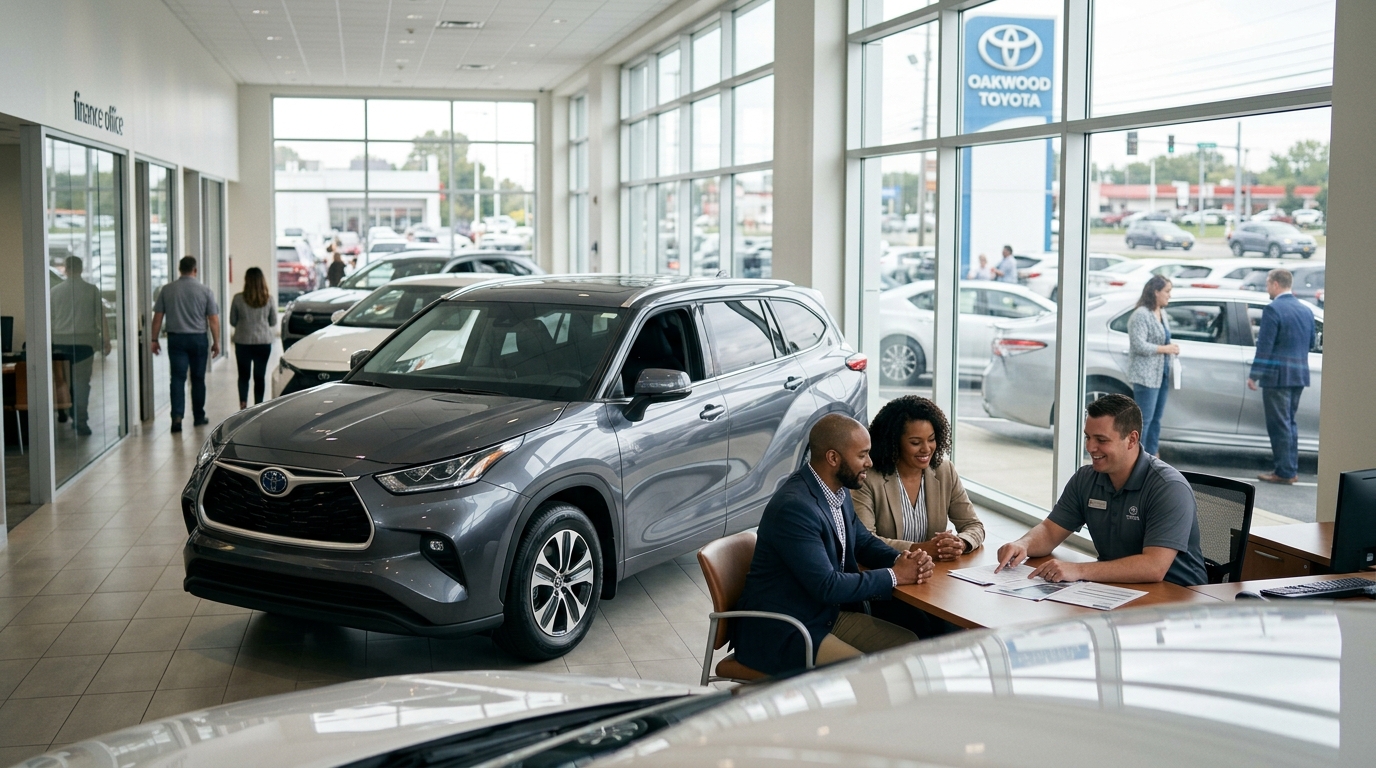
Toyota Motor North America reported September 2026 U.S. sales of 201,306 vehicles, up 8.4% on a volume basis compared to September 2025. The number alone is worth pausing on. The broader industry grew roughly 2.6% by volume. Toyota’s rate was more than three times that.
The growth was not driven by one product category holding everything else up. Electrified vehicle sales for the month totaled 117,215, up 37.8%, representing 58.2% of total sales volume. The Toyota division achieved an electrification mix of 61% in September, an all-time best. That is what a hybrid portfolio built over two decades looks like when fuel prices are elevated and buyers are watching their monthly payments.
Where the Discounts Are Going
Now for the other story. A joint September 2026 forecast from J.D. Power and GlobalData said average industry incentive spending per vehicle is trending toward $3,574, a 7.3% increase from a year ago. Incentives as a percentage of MSRP are expected to hit 6.9% in September, up 0.4 percentage points from September 2025. That figure is not a rounding error. It represents real money being left on the table by manufacturers to keep showrooms active.
The important detail is where those discounts are being concentrated. The same J.D. Power and GlobalData forecast said incentive spending on traditional internal combustion engine and hybrid vehicles is expected to increase $797 per unit year over year, up 31.6% to $3,319 in September 2026.
But the competitive problem for Detroit is less about whether discounts exist and more about what they are compensating for. In a September 24 Reuters report citing a Cox Automotive forecast, GM’s U.S. vehicle sales pace was described as trailing the broader industry, expected to decline 6.2% year-to-date through September 30. Cox projected GM will finish the quarter with a 16.7% market share, down from 17.4% a year earlier.
That same Reuters report said GM dealers described some customers switching to other brands because GM doesn’t offer hybrid models.
Ford faces a related problem. Reuters has reported that Ford’s sales were pressured after it discontinued the Escape compact SUV, and that overall sales were also pressured by lower pickup-truck production after a fire at an aluminum supplier disrupted supply.
The Investment Case for TM
For investors holding or watching Toyota (TM), the September number reinforces a thesis that has been building for years. In that same September 24 Reuters report citing Cox Automotive, automakers with several hybrid models were described as faring better this year as buyers prioritized fuel efficiency amid higher gas prices.
Toyota did not pivot to hybrids in 2024 or 2025. The infrastructure, the supply chain, and the model lineup were already there.
Cox Automotive said Toyota continues to close the gap with GM. Earlier this year, Cox described Toyota as within roughly 130,000 vehicles of GM by the end of September.
That gap has narrowed considerably. A carmaker that held second place in the U.S. for most of this century is now within reach of the top position, and it is getting there without resorting to the industry-average discount rate.
What Investors Should Watch
The 6.9% incentive figure is the number to track going into Q4. When discounts represent nearly seven cents of every dollar of sticker price across the whole industry, margin pressure becomes the central risk for automakers who need volume to cover fixed costs. Toyota’s hybrid dominance gives it more pricing latitude than its Detroit peers. GM and Ford, by contrast, are in a position where growing sales and protecting margins pull in opposite directions.
The long-term wealth lesson here is straightforward: product decisions made a decade ago are showing up in market share data today. Investors who identified Toyota’s multi-pathway electrification strategy early had a front-row seat to compounding advantages. The same structural thinking, applied now, points toward asking which automakers have a product mix that lets them grow without buying their own customers.