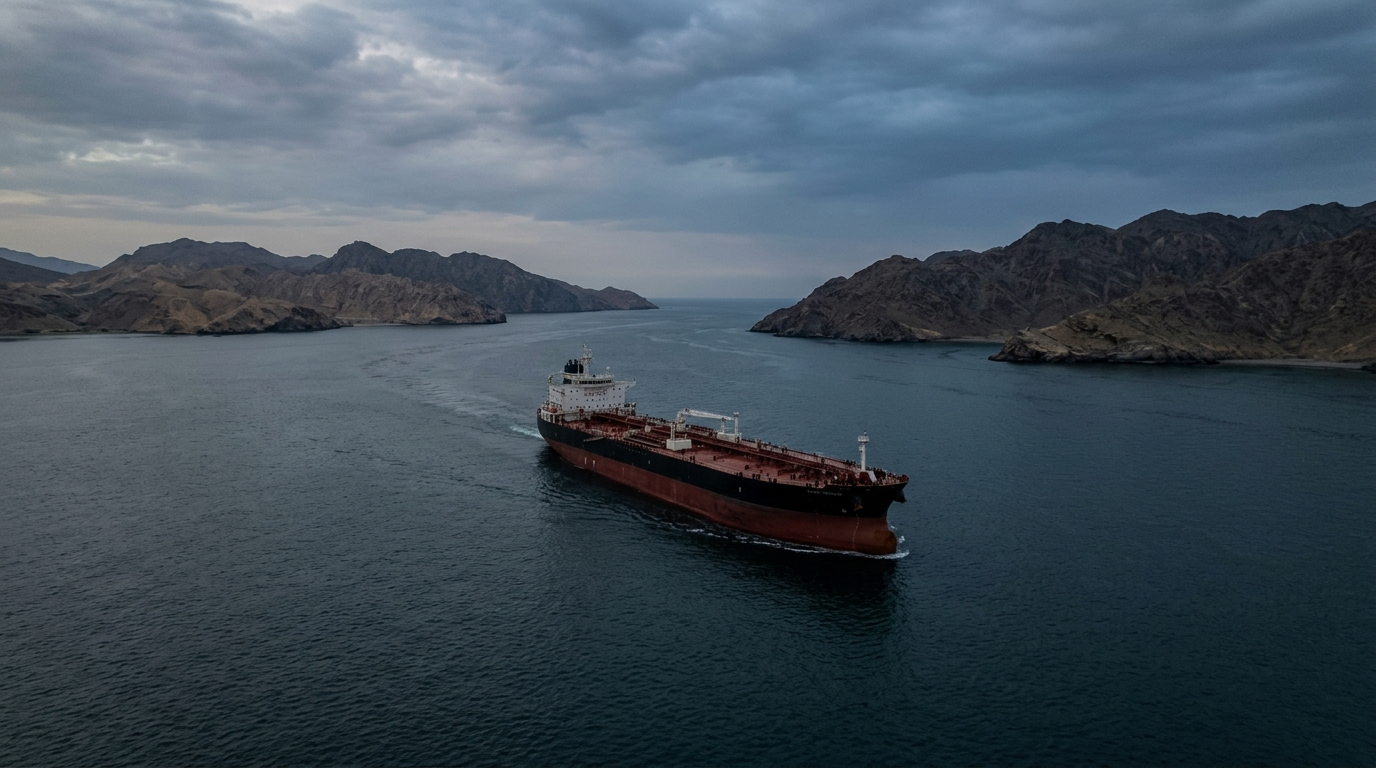
Two official accounts of the Strait of Hormuz cannot both be true. Iran’s armed forces said Thursday that four tankers caught fire after hitting mines while attempting to navigate the strait, a day after the US military said it had cleared key routes through the waterway.
CENTCOM’s response was blunt: “All internationally recognized primary transit routes through the Strait of Hormuz have been cleared of sea mines by US forces and remain so,” adding that “thousands of commercial vessels have safely used the transit lanes and continue today.”
So who does the oil market believe? The price is a cleaner answer than any statement from either capital.
Brent’s December contract, which expires Friday, was up $1.20 or 1.04 percent at $116.08 a barrel, while the more active January contract was up $1.39 at $112.19 and Brent is on track for a gain of nearly 11 percent in October, its fourth straight monthly rise. WTI has added roughly 14 percent over the same stretch. That is not a market that reads the CENTCOM all-clear as definitive.
Iran’s Islamic Revolutionary Guards Corps said in a statement that “over the past 24 hours, three violating oil tankers exploded and caught fire after striking mines while attempting to pass through the unauthorised southern route of the Strait of Hormuz.” Later Thursday, Iran’s army reported that another tanker had caught fire east of the strait, after hitting mines while “operating in a restricted and dangerous area.” It was not immediately clear when the incidents occurred or which flags the tankers were flying.
The geography of the dispute matters. CENTCOM’s claim of cleared lanes applies specifically to the internationally recognized primary transit routes. CENTCOM rejected the IRGC claims of mine strikes, stating that the primary transit lanes remain “cleared,” while Gulf News noted that this does not establish that the whole Gulf is free of mines. Iran, for its part, has designated certain routes off-limits and treats any vessel using them as having accepted the risk. The Guards said “the unauthorised route through the Strait of Hormuz is mined, and that vessel owners and crews are responsible for transiting these routes and should not pay attention to CENTCOM’s delusions on social media.”
That is the core of the information war, and the freight market has already priced it. VLCC freight on the Saudi Arabia to China route hit about $1.35 million per day in October 2026, as war-risk insurance premiums for Hormuz transits reached roughly 7.5 to 10 percent of hull value per voyage. A lane that CENTCOM calls clear but that insurers price as a war zone is, commercially speaking, not clear at all.
As of October 21, Middle Eastern oil exports had averaged more than 24 million barrels per day in the week ending October 18, exceeding the pre-war level of 23.3 million. However, preliminary estimates put flows through Hormuz itself at approximately 14 million barrels per day, or about 82 percent of pre-war levels. The gap between total exports holding up and Hormuz flows still well below baseline is where the risk premium lives. Oil is moving, but not freely, and not cheaply.
The structural read cuts against a quick resolution. Since the IRGC declared the Strait of Hormuz closed on October 26, Iran has treated every maritime incident in the strait as confirmation that its closure warnings should have been heeded, and every American reassurance about cleared transit lanes as a claim that puts commercial crews at risk. Both sides have institutional incentives to hold their position, and the information environment around Hormuz gives neither crew nor charterer a reliable way to adjudicate between them in real time.
The one data point that will matter most in the days ahead is vessel-tracking behavior, not government statements. If charterers begin routing through the primary lanes in volume, CENTCOM’s account gains commercial credibility. If bookings stay thin or war-risk premiums stay elevated despite the all-clear, the market will have delivered its own verdict again, the same way it did this week, one monthly gain at a time.
Watch the January Brent contract closely once December expires today. At $112.19, it already trades nearly $4 below the expiring front month. Whether that spread narrows or widens early next week will say more about what traders actually believe than anything either Tehran or Washington posts online.