The number that stopped the investment committee cold this week was not a Fed statement or an earnings miss. It was this: global DRAM revenue jumped 369% year over year in Q3 2026 to nearly $200 billion, as demand for AI accelerators and data center servers kept supply tight and pushed selling prices to new records.
Shipments, however, barely moved. The 369% revenue increase came at a time when bit shipments were up only about 4%, with a price surge doing most of the work.
That distinction is everything. This is not a volume story. It is a price regime story, and regime is the right word.
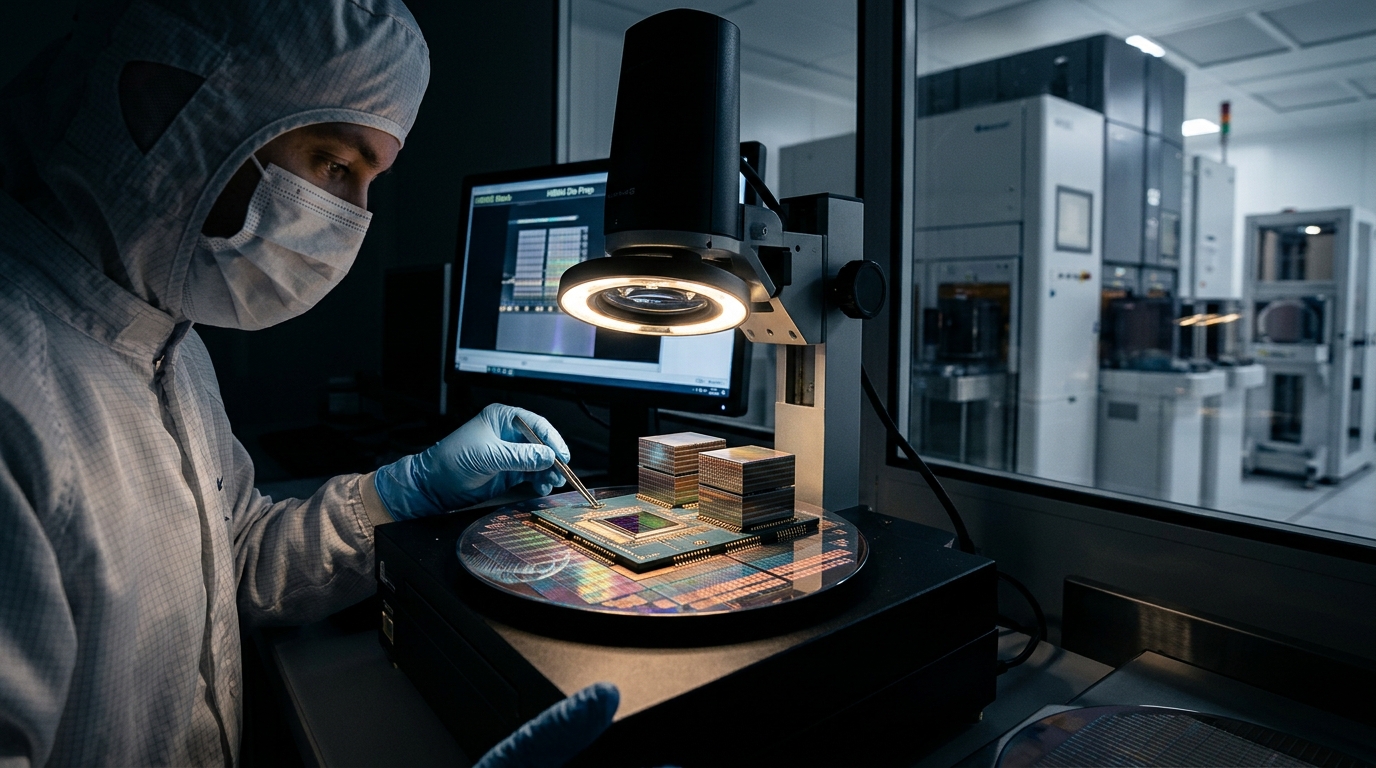
Counterpoint Research director MS Hwang described the per-unit shift in starker terms, saying DRAM prices that once sat at 20 to 30 cents per gigabit have climbed to about $2 per gigabit, with HBM4 heading toward $4 per gigabit. For the buyers in this market, chiefly hyperscalers and Nvidia’s direct server customers, that is not a line item rounding error. It rewrites the bill of materials on every GPU cluster ordered in 2027.
The Bull Case: Sold Out Before the Year Ends
The bear argument on memory stocks has always been the same: prices spike, fabs build, prices collapse. That cycle appears broken. Server DRAM contract prices are still rising, HBM4 is ramping, next year’s supply is already spoken for, and as the long-term agreement share rises, DRAM pricing and supply are shifting toward multi-year contracts rather than spot markets.
Samsung expects 2027 AI-driven demand to far exceed industry supply, Micron expects tighter conditions in 2027 and 2028, and TrendForce expects contract prices to stay broadly elevated in 2027. New fab capacity capable of relieving that pressure will not arrive in volume before late 2027, with meaningful relief pushed into 2028 or 2029. TrendForce’s forecast for blended HBM average selling prices in 2027 is up 121% year on year, helped by a larger HBM4 mix.
The Bear Case: Cycle, Not Regime
Counterpoint itself notes that price increases slowed from the steep rates recorded in the first half of 2026. Selling prices remained the main driver of revenue growth, but the pace of gains decelerated. Consumer budgets are already buckling: memory’s share of low-end smartphone component costs jumped from 20% in Q3 2025 to 54% in Q3 2026. That is an affordability ceiling forming in real time, even if enterprise buyers are still paying whatever Samsung and SK hynix ask.
China’s CXMT held about 9% of the DRAM revenue market in Q3 2026 and is expanding. If its yields improve faster than expected, the oligopoly pricing model cracks.
What Investors Are Missing
The TSMC episode last week is the signal worth dissecting. The Information, citing two people familiar with the initiative, reported on November 6, 2026 that TSMC had begun preparing plans for 3D DRAM manufacturing after a request from Nvidia, its largest customer. TSMC publicly rebutted the report, saying it is focused on its core business of semiconductor foundry services. The denial walked back a story that had sent TSMC’s US-listed shares up about 6% in U.S. trading on November 6, 2026.
The denial matters less than the question behind the story. Nvidia is desperate enough for memory supply that it reportedly approached its foundry partner about entering an entirely different business. Even major memory makers are years away from 3D DRAM. Micron, Samsung, and SK hynix are all working on it, with Micron describing a roadmap that still includes multiple more planar process generations before 3D DRAM becomes a reality. The real implication is that Nvidia’s dependence on SK hynix and Samsung is structural, not temporary, and that pricing power flows accordingly.
Stocks to Watch
- SK hynix: The clearest beneficiary. Counterpoint said SK hynix’s DRAM revenue grew more than 40% quarter on quarter in Q3 2026. HBM4 volumes for 2027 are locked at higher prices.
- Micron (MU): Revenue market share slipped from the mid-20s earlier in 2026 to about 21% in Q3, but Micron has said more than 75% of its fiscal 2027 output is already committed. The backlog is the story, not the share table.
- Samsung Electronics: Samsung kept the top spot with a 38% share of DRAM revenue and its 2027 HBM supply is already spoken for at target prices. The HBM4e mass production ramp in 2027 is the catalyst to watch.
- Nvidia (NVDA): The largest loser from sustained memory inflation. Every dollar per gigabit added to HBM4 pricing flows directly into Nvidia’s accelerator cost base and pressures margins on systems it sells to hyperscalers.
- Dell (DELL): Server OEMs face the same memory cost spiral on every rack they ship. How much Dell can pass through versus absorb will show up in infrastructure segment margins across the next two quarters.