Scoreboard
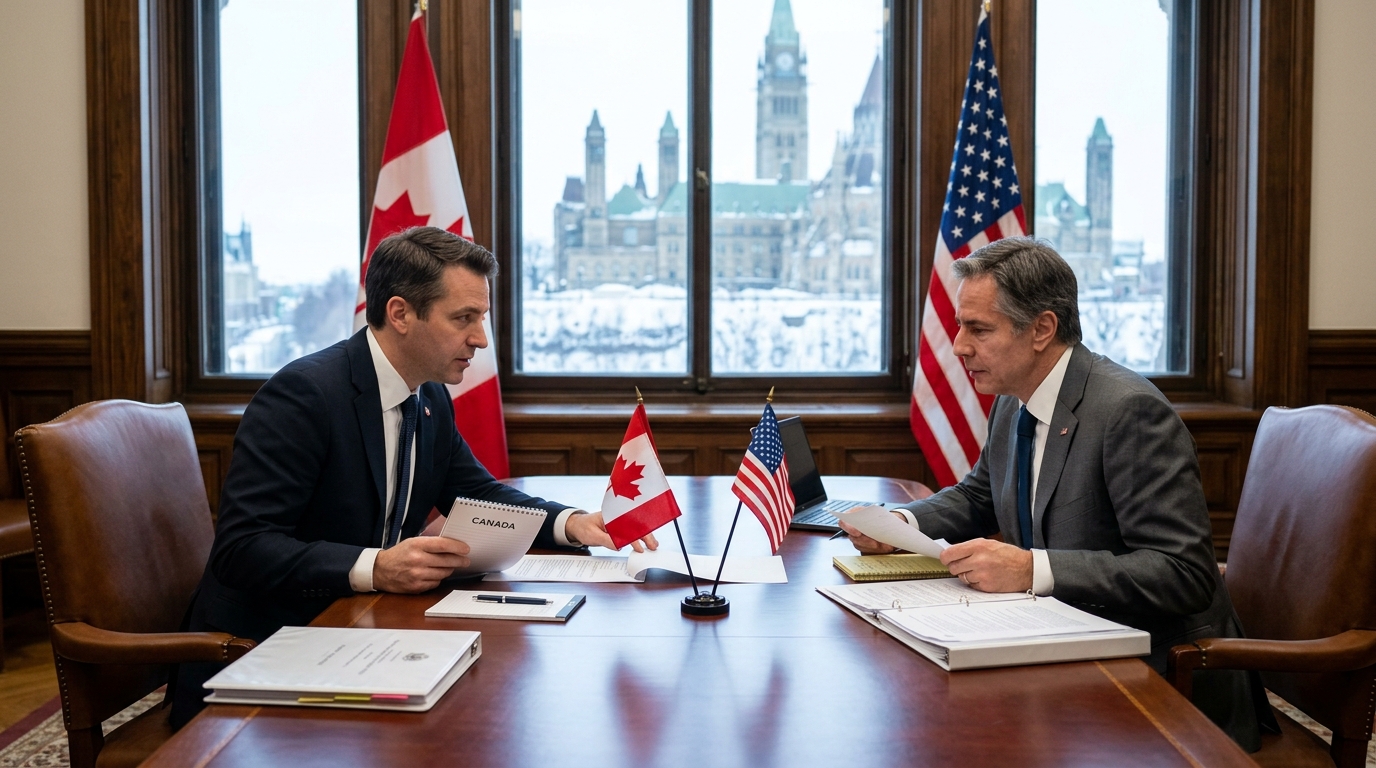
Hey there, bargain hunter. Less than two hours before a midnight deadline, the White House blinked. Trump posted on Truth Social late Tuesday that he was pausing the 50% tariffs on Canadian goods for three days, citing a deal pending finalization. The tariffs, which had been set to hit at 12:01 a.m. Wednesday, were the first-ever use of Section 338 of the Tariff Act of 1930, covering roughly $20 billion worth of Canadian imports annually. Canadian Prime Minister Mark Carney confirmed the delay holds until end of day August 21, calling progress “substantial” while also noting that “important work” remains.
That is a politician’s way of saying: nothing is signed.
The Real Reason
Markets have been trained to read tariff pauses as resolutions. They are not, at least not yet. The announcement buys time for more negotiations and avoids, for now, another strain in an already tense relationship between two countries that sold each other about $880 billion worth of goods and services last year. Canada had threatened its own retaliatory tariffs if the Section 338 duties went live. That counter-escalation threat is off the table for 72 hours, and that is what moved the needle on the Canadian dollar.
The real story is not the three-day reprieve. It is the legal instrument that made this fight possible and what it means for every company with supply chains running north-south on this continent.
Deep Dive: What Section 338 Actually Is
Here is the part most coverage glosses over. Section 338 of the Tariff Act of 1930 is a provision that has been sitting on the books for nearly a century without ever being used to impose tariffs. Trump reached for it after the Supreme Court invalidated his broader IEEPA tariff authority on February 20, 2026, forcing the administration to find a legal tool that could survive judicial review.
Section 338 authorizes the President to impose duties of up to 50% on goods from any country found to discriminate against U.S. commerce compared to how that country treats other trading partners. No investigation required. No comment period. Tariffs can appear with as little as 30 days’ notice. And unlike Section 122, which carried a 150-day maximum and expired July 24, 2026, Section 338 carries no fixed expiration date. These tariffs could, in principle, stay in force indefinitely.
The administration cited three areas of Canadian discrimination: provincial and territorial liquor-board restrictions on U.S. alcoholic beverages, Canada’s supply-management quota system for dairy, and the treatment of U.S. automobiles. On July 20, Trump signed three separate proclamations, each targeting a distinct set of goods at the same 50% rate. From April 2025 through March 2026, Canadian imports of U.S. motor vehicles decreased by approximately 22%, or about $5.6 billion, compared to the same period in 2024-2025. That data point is the administration’s core grievance on autos.
Here is the twist that caught most importers off guard: USMCA provides zero relief. A valid certificate of origin does not exempt a single covered product from the 50% duty. Goods that qualified for preferential treatment under the trade agreement remained fully exposed. Carve-outs exist only for energy, potash, fish, critical minerals, and goods already subject to Section 232 tariffs, including steel, aluminum, and copper.
Data Section
- $20 billion: Annual value of Canadian imports covered by the three Section 338 proclamations, per the USTR’s estimate.
- $880 billion: Total goods and services traded between the U.S. and Canada last year, the relationship that both sides are protecting.
- 72%: Share of Canada’s total goods exports that go to the United States, the dependency that brought Ottawa to the table.
- 5%: Share of Canadian exports to the United States that the threatened Section 338 tariffs cover, according to reporting on the administration’s estimate.
- 50%: The tariff rate, applying on top of all existing duties.
- August 21: The current deadline for a finalized deal, per Carney’s statement.
- 0: The number of times Section 338 had been used to impose tariffs in modern trade history before July 2026.
The Negotiating Map
Carney and Trump spoke twice by phone in the two days leading up to Tuesday’s deadline, including a call Tuesday afternoon. U.S. Trade Representative Jamieson Greer met directly with Canadian officials at the Department of Commerce on Monday. That is a lot of contact for two sides that were supposedly far apart.
A White House proclamation said Canada had expressed commitment to remove measures the Trump administration considers discriminatory against U.S. alcohol, dairy, and motor vehicle exports. Canada did not immediately confirm those specific commitments. Carney’s more cautious language suggests Ottawa is not ready to publicly concede on any of the three core sectors.
Trump’s Truth Social post also referenced Keystone XL, the crude oil pipeline killed by Biden in 2021 that would have transported up to 830,000 barrels per day from Alberta’s oil sands to Nebraska, connecting to Gulf Coast refineries. A Canadian company, South Bow, has already been exploring a revival with a U.S. partner, Bridger Pipeline, which filed a proposal in Montana for a roughly 645-mile pipeline capable of carrying up to 550,000 barrels per day. Keystone XL is the carrot. Section 338 is the stick.
The administration is also renegotiating the USMCA itself, the trade framework Trump strong-armed into existence in his first term. Section 338 gives Washington fresh leverage to seek concessions from Ottawa outside the formal USMCA dispute process. That is its real strategic value: a negotiating weapon with no procedural guardrails.
Is It Cheap? The Investor Angle
For bargain hunters, the question is not whether the deal closes by Friday. It is what the trade environment looks like for North American-exposed assets regardless of how this specific pause resolves.
Two opposing forces are now in play. On one hand, a lasting agreement, defined here as one that removes or dramatically reduces the Section 338 threat on a durable basis, could push USD/CAD toward 1.37, per strategists at Monex Europe. That would represent a meaningful tailwind for Canadian equities and cross-border industrial supply chains. On the other hand, a failure to close a deal by August 21 could push USD/CAD back above 1.40 and force a reset in Canadian-exposed U.S. importers in dairy, alcohol, and auto manufacturing. The midterm elections in November add a third dimension: a hefty new tariff on Canadian consumer goods, paid by U.S. importers and passed through to prices, is not an easy political sell when voters are already frustrated with the cost of living.
Both sides had incentive to step back from the brink Tuesday night. Neither side had completed the paperwork for a deal. That gap between “stepping back” and “signing” is where the investment risk lives for the next 72 hours and beyond.
Bull / Base / Bear
Bull: A fully documented agreement before Friday’s deadline removes the Section 338 cloud entirely. USMCA renegotiation proceeds in a cooperative framework. CAD strengthens, Canadian equities rally, and North American supply chains reset lower on tariff risk. Keystone XL revival discussions add a long-dated energy infrastructure tailwind.
Base: Another extension, another partial resolution via side letters rather than a comprehensive agreement. The Section 338 proclamations remain in place but are not enforced while talks continue. Supply chain uncertainty persists. Companies in affected sectors continue to hold off on capital allocation decisions. Market volatility around each new deadline becomes the rhythm of the trade.
Bear: Talks collapse before August 21. Section 338 tariffs go live on goods covered by the July proclamations. Canada retaliates with levies of its own, escalating a fight between countries that exchange about $880 billion annually. Legal challenges in the U.S. Court of International Trade complicate enforcement but do not immediately stop it. Affected U.S. importers in dairy, alcohol, furniture, and auto parts absorb sharp cost increases ahead of a consumer spending cycle already under pressure.
Action Plan
The three-day clock matters less than the structural read. Here is the framework:
If you hold Canadian-exposed industrials or consumer brands with cross-border supply chains, do not add into the relief rally. The Section 338 authority does not go away on Friday. It exists as a standing weapon regardless of how this particular pause resolves. A side-letter deal, which has been the path of least resistance in past North American trade disputes, does not eliminate the proclamations. It suspends them.
If you are looking for direct Canadian market exposure, the energy carve-out is the cleanest read. Oil, potash, and critical minerals are explicitly excluded from Section 338. Canada ships roughly 4.4 million barrels per day of crude to U.S. refiners. That flow was never at risk from these specific tariffs. Energy names with integrated U.S. refining exposure are structurally cleaner than dairy or auto-adjacent plays right now.
On USD/CAD, the Monex Europe 1.37 target for a lasting deal is a reasonable anchor for sizing a position. A three-day extension is not a lasting deal. Fade the initial CAD strength unless documents are actually signed.
Cheap Investor Checklist
- August 21 deadline: Did both sides produce signed, public documentation or another extension? Extension is the base case. Watch the language carefully.
- Canadian retaliation status: Has Ottawa formally withdrawn or suspended its own retaliatory tariff threat? A yes here signals real progress. A no here means the standoff continues under a different label.
- USMCA carve-out language: Any final deal language that restores USMCA preferential treatment for covered goods is a material positive for supply-chain-heavy sectors. Its absence means Section 338 stacks, potentially for a long time.
- Keystone XL specifics: Watch for whether the pipeline becomes a formal agenda item with a timeline, or remains a social-media-post level mention. A formal commitment would move Canadian energy infrastructure names.
- USD/CAD level: 1.37 is the bull target for a lasting deal. Sustained move above 1.40 is the bear signal. Current positioning between those levels reflects the market’s appropriate agnosticism.
- Legal challenges: Litigation in the U.S. Court of International Trade on the constitutionality of Section 338 is anticipated by multiple law firms. A court injunction would change the math entirely.
- Canadian alcohol and dairy concessions: These are the specific asks. Public confirmation from Ottawa that it will open provincial liquor boards and reform supply management would be the clearest signal a real deal is within reach.
- U.S. motor vehicle export data: The 22% decline in Canadian imports of U.S. motor vehicles is the administration’s core grievance. Watch whether any agreement addresses the auto issue directly.
- Section 338(b) escalation clause: The statute allows the President to escalate to a full import ban if Canada maintains or increases its discrimination. Nobody is discussing this clause publicly. That is the tail risk.
- November midterm calendar: Tariff-related consumer price increases hitting before Election Day are politically toxic for any incumbent. That calendar pressure is what brought both sides to the table Tuesday night, and it will continue to push toward resolution.
Bottom Line
If documents are signed by August 21 and the Section 338 proclamations are formally suspended, the market relief rally in Canadian equities and CAD-denominated assets is real and deserves a bid. If the pause extends without documentation, treat it as a ceasefire, not a treaty. The legal weapon that made this fight possible, a 1930 tariff statute that had never been used before July 2026 and carries no expiration date, does not disappear from the arsenal regardless of how Friday resolves. The real question for bargain hunters is not whether the tariffs hit this week. It is whether North American supply chain economics have permanently changed, and whether the companies you own have priced that in.
They almost certainly have not.