The most clarifying thing about Google’s nuclear deal with Constellation Energy is what it chose not to do. Google did not back a startup promising first-of-a-kind small modular reactors. It did not fund a greenfield reactor application sitting in a federal queue. It signed a 20-year PPA to fund physical upgrades at reactors already spinning in Illinois and New Jersey, with the first new megawatts expected by 2028.
That choice is an investment thesis, not just a power contract.
Why This Stock Now
Google will buy 890 MW of incremental nuclear output from Constellation Energy under a 20-year PPA covering 11 reactors across PJM, with Constellation investing more than $4.3 billion to fund the uprates, the first of which is expected by 2028. The 890 MW is new, incremental capacity created through uprates and delivered onto the PJM grid, expanding total electricity available across the region. A separate 15-year agreement covers 2,700 MW from Constellation’s existing PJM fleet, effectively putting a long-term revenue floor under plants already running.
Constellation’s shares surged more than 14% on the day of the announcement. Since then the stock has pulled back considerably. CEG closed at $253.45 on October 23, more than 37% below its 52-week high of $406.04. That gap is the opportunity.
The Business
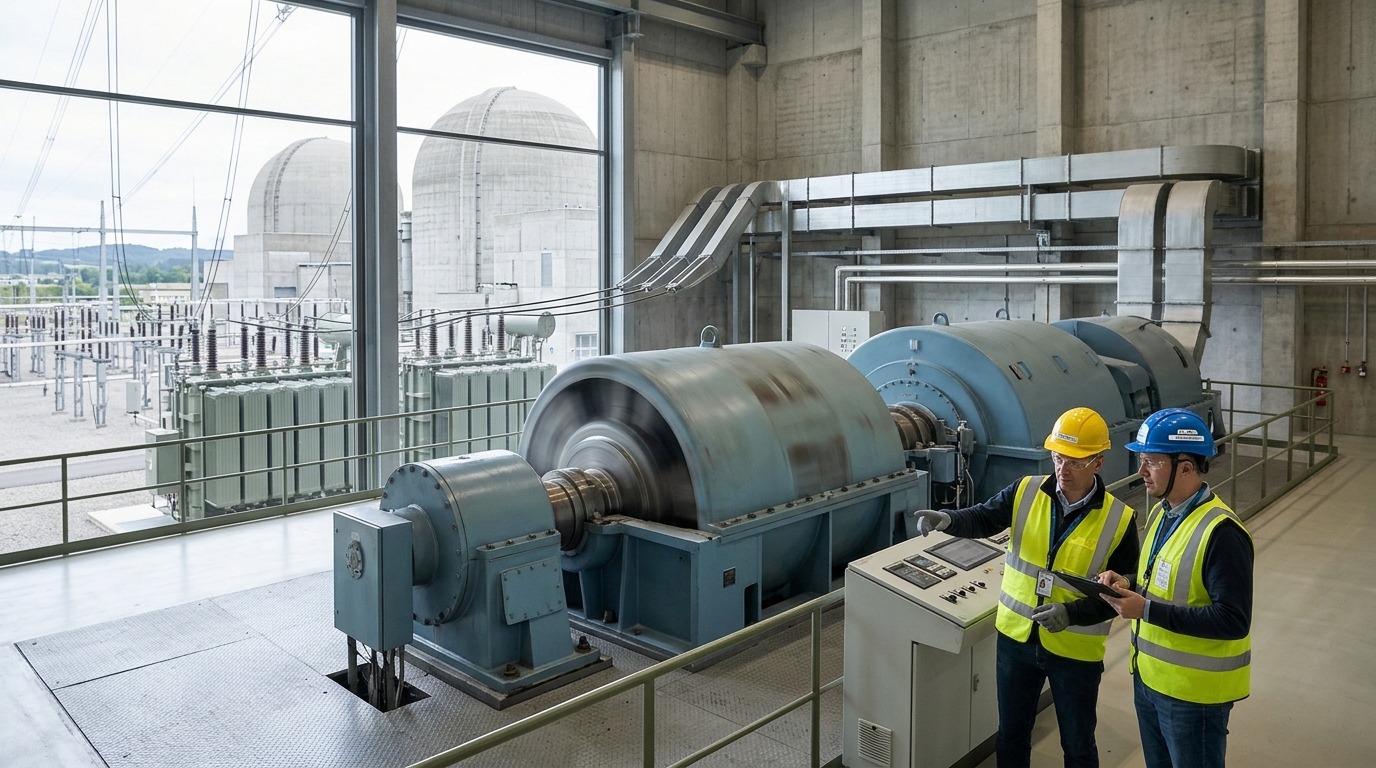
Uprates modernize turbines, steam generators, and digital control systems so reactors already running produce more electricity, sidestepping the multi-year waits and interconnection logjams that dog greenfield nuclear. That is not a minor operational footnote. As of the end of 2025, active U.S. interconnection queues totaled roughly 1,312 GW of generation plus about 749 GW of storage, and median wait times in the regions with data were over five years for projects that made it to commercial operation in 2025. Uprate megawatts bypass that line entirely because the plant already has its interconnection.
The work spans Braidwood, Byron, LaSalle, and Quad Cities in Illinois, Limerick in Pennsylvania, and Salem in New Jersey, where Constellation owns 43 percent.
Why Wall Street Is Paying Attention
The contrast with Amazon’s approach is instructive. Amazon signed an agreement to explore building 12 of X-energy’s Xe-100 small modular reactors in Indiana, a project that would add 960 megawatts of capacity, with Amazon acting as a project development funder and potential early customer. But no construction date, cost, or in-service date was disclosed. An X-energy representative indicated the project could be completed as early as the mid-2030s, though the timeline could change as development work progresses.
Constellation’s first uprate megawatts reach PJM in 2028. Amazon’s Indiana bet might reach the grid in the mid-2030s. That is not a rounding error in delivery timing; it is a decade of revenue.
Constellation has now inked long-term nuclear PPAs with Google and Microsoft, and it has also signed major long-term agreements with other hyperscalers in the broader “data centers meet nuclear” wave. Morgan Stanley raised its price target on CEG to $378, maintaining an Overweight rating. The consensus among 24 analysts sits at a Buy, with an average 12-month target of about $338.
What’s Driving the Opportunity
Vistra offers a useful parallel. The DOE announced a conditional loan commitment of $4.2 billion to Vistra to finance nuclear uprates and modernization across its nuclear fleet in Pennsylvania and Ohio. That effort is tied to Vistra’s long-term PPAs with Meta that cover more than 2.6 GW from existing plants, including 433 MW of incremental uprate capacity. Washington is clearly picking the same side Google is: existing plants, not construction bets.
Constellation commands a larger and more diversified fleet. The 890 MW of incremental capacity from the Google deal equals the output of several small modular reactors or a large new conventional reactor. It arrives years ahead of any SMR that does not yet have a construction permit.
What Could Go Wrong
The stock is down roughly 28% year-to-date for a reason. Execution on $4.3 billion of simultaneous uprate work across six sites is genuinely complex. Regulatory delays at the NRC, cost overruns, or a shift in PJM capacity auction rules could compress the returns that Google’s PPA is meant to support. And while 20 years of contracted revenue sounds durable, the PPA pricing was not disclosed, leaving margin uncertainty.
There is also competitive pressure. Vistra expects to begin delivering uprate capacity tied to its Meta agreements starting in 2031, with full uprate delivery by end of 2034. Both companies are racing through similar engineering work with federal loan support. CEG is not the only play here.
The Bottom Line
Google’s decision to fund uprates rather than back an SMR startup answers the central question in power investing right now: which megawatts can you actually count on, and when? The answer keeps pointing to plants with grid connections, operating licenses, and balance sheets large enough to absorb multi-billion dollar capital programs. Constellation has all three, and it is trading more than a third below its high with a Morgan Stanley target implying roughly 49% upside. That combination earns the top spot on this desk today.