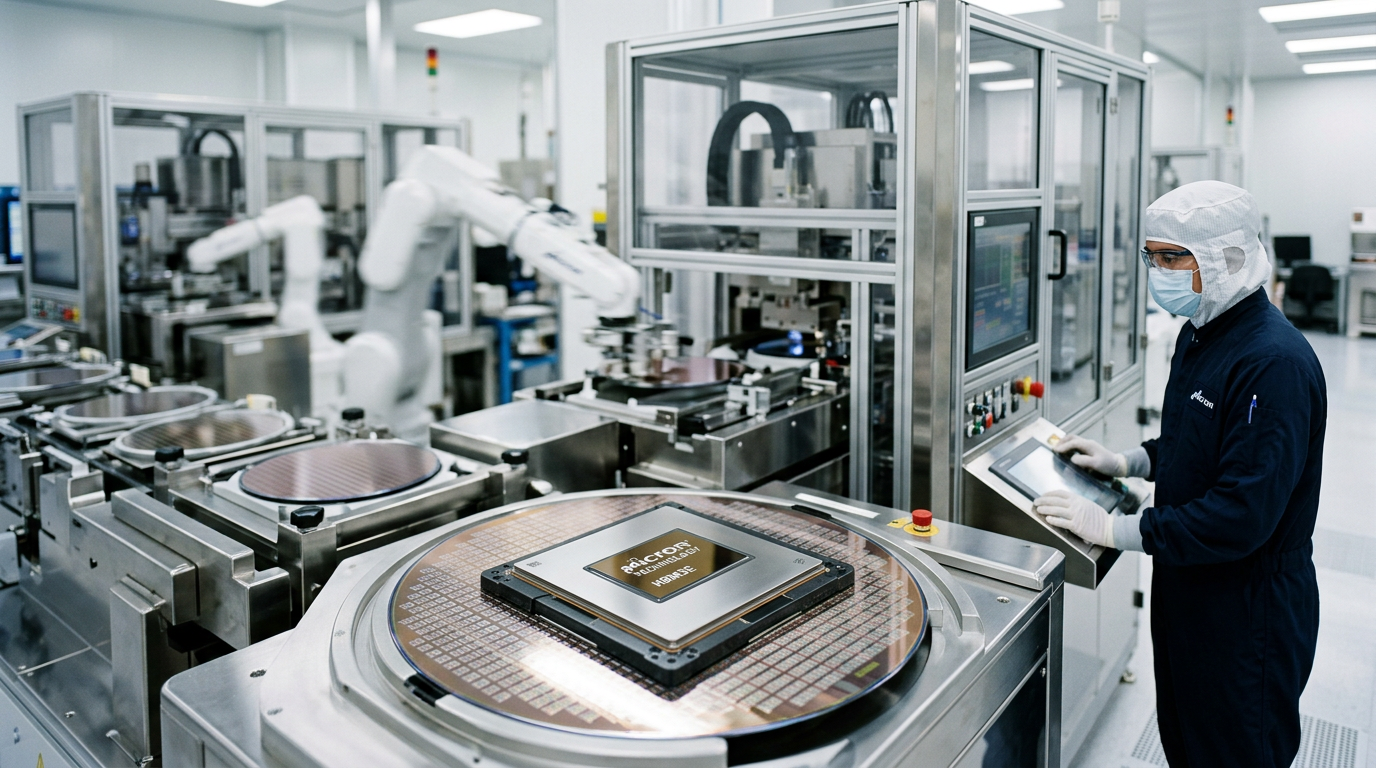
The Philadelphia Semiconductor Index has fallen about 38% from its June 22 high. TSMC just reported its best month ever. Those two facts cannot both be right about the state of AI demand, and October’s revenue report makes clear which one is.
TSMC posted consolidated sales of NT$586.89 billion, roughly US$17.85 billion, for October, up 59.7% from a year earlier and 14.7% from September. The figure surpassed the previous monthly record of NT$514.81 billion set in August. Through the first ten months of 2026, cumulative sales rose 43.3% from a year earlier to about NT$4.49 trillion. This is not a company whose customers are pulling back.
Why This Report Matters More Than Usual
Timing is everything here. The SOX sits roughly 38% to 40% below its June 22 high. The break followed broad selling and an unwind in semiconductor and AI stocks, as investors questioned whether huge data center spending would ever generate sufficient returns. The bear case rested on demand softening before the capex bills came due. TSMC’s October number is the first clean, monthly read on actual foundry throughput since that debate intensified, and it arrived at a record.
October beat the NT$560 to NT$570 billion that analysts had pencilled in. The beat matters as much as the absolute level: customers do not over-order at a near-monopoly foundry when they are worried about the future.
What Is Driving the Numbers
Analysts pointed to continued strong demand for TSMC’s advanced processes as the key driver behind October’s record revenue. In Q3, 2nm process technology rose from 3% of wafer revenue in Q2 to 8% in Q3. High Performance Computing, the segment that includes AI accelerators and data center chips manufactured for Nvidia, AMD, and other fabless design firms, made up 68% of third-quarter sales. October’s acceleration suggests that proportion held or grew.
October’s record sales of NT$586.89 billion exceed the average monthly run-rate of roughly NT$575.6 billion required to hit the upper bound of management’s Q4 target, putting the foundry on pace for another record quarterly performance. TSMC expects fourth-quarter 2026 revenue of between $52.3 billion and $54.3 billion and full-year 2026 revenue growth of approximately 44% year over year in U.S.-dollar terms.
Bull Case
The simplest version: AI infrastructure spending has not slowed, it has accelerated. SemiAnalysis analyst Sravan Kundojjala told CNBC that even after TSMC checks whether customers have the financing and supporting components to deploy AI systems, “demand remains well above its supply capacity.” If October is indicative of the Q4 run-rate, the SOX decline reflects sentiment and valuation compression, not any deterioration in the underlying order book. That is a recoverable gap.
Bear Case
Monthly revenue is a lagging signal. Orders placed months ago land in October’s figures; the question is what November and December bookings look like. Concerns about higher interest rates, stretched valuations, and the cost of building AI infrastructure drove the broader semiconductor selloff. None of those concerns disappear because one month came in strong. And the SOX currently trades at about 13.7x forward earnings versus about 17.7x for the S&P 500, a roughly 22% discount for the semiconductor sector relative to the broader market. A re-rating back to a premium requires sustained evidence, not one data point.
What to Watch Next
Based on Q4 guidance, analysts estimate TSMC’s monthly consolidated sales will range from roughly NT$538.1 billion to NT$569.9 billion in November and December. October already sits above that band. If November holds above NT$560 billion, the full-year growth guidance of roughly 44% moves from achievable to conservative.
The other variable is margin. TSMC’s Q4 gross margin guidance sits at 65% to 67%. Revenue records mean less if 2nm dilution squeezes profitability faster than the top line grows. Watch the Q4 earnings release, due in January, for how those two forces resolve.
Bottom Line
TSMC’s October revenue is the most concrete evidence available that AI chip orders did not break when chip stocks did. The SOX selloff was built on the fear that demand would eventually crack under the weight of financing costs and ROI doubt. So far, the foundry that makes almost every leading AI chip says otherwise, with numbers, not guidance. Investors who concluded that the demand story was over may want to revisit that call.