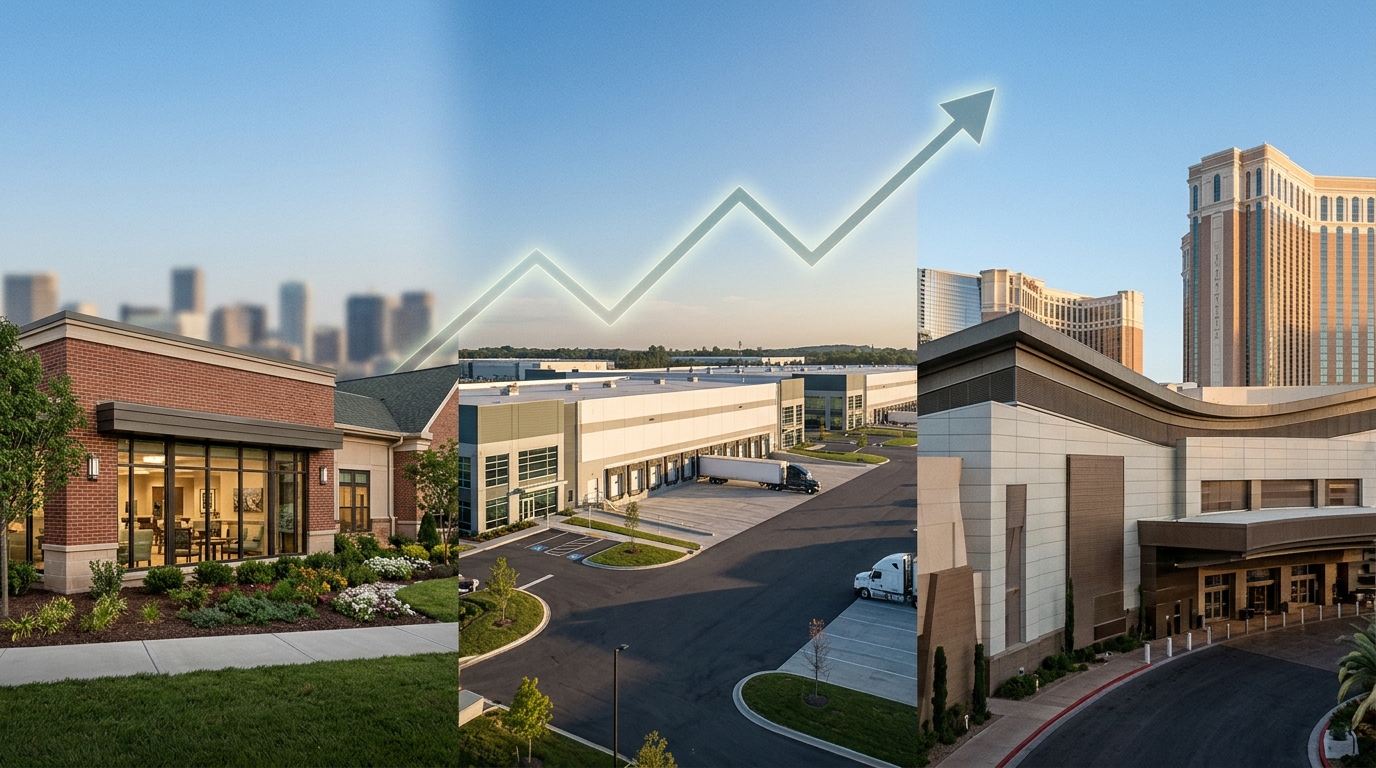
Most REIT conversations start with interest rates. That framing misses something important this year. REITs are trading at a discount to net asset value in many analyses, but the size of that discount varies by index and methodology, and broad sector figures can swing quickly. The discount is real, but so is the underlying business momentum. Three names illustrate why.
Welltower (WELL): Aging Population, Historic NOI
Welltower has turned senior housing into a growth engine that most investors still associate with slow, defensive income. Same-store net operating income surged 22.1% in Q1 2026, marking the 14th consecutive quarter of 20%-plus NOI growth, an unusual streak in the seniors housing operating portfolio. The company is not coasting on demographics alone. CEO Shankh Mitra said Welltower has been highly active on the acquisition front, but the claim that it invested $9.5 billion since the start of 2026 could not be verified from the company’s Q1 2026 release materials and call coverage. Adjusted EBITDA did grow sharply year over year in Q1 2026, and management also highlighted balance-sheet improvement, but the specific combination of “36%,” “3.3x to 2.7x,” and “$3.2 billion of concurrent investment activity” could not be verified from primary Q1 2026 materials, so those figures have been removed. The operating platform is tightening margins while occupancy climbs. That combination is difficult to replicate.
Prologis (PLD): Warehouses Are Back
The industrial slowdown that weighed on Prologis through much of 2024 and 2025 has reversed. Industry trackers show tightening in Q2 2026, but the specific claim of 66 million square feet of net absorption and 7.2% vacancy in Q2 2026 varies depending on the source; for example, Colliers reported 59 million square feet of net absorption and 7.3% vacancy for Q2 2026. Q3 core FFO per share came in at $1.60, compared with $1.49 for the same period in 2025. The world’s largest warehouse landlord signed 60 million square feet of leases in Q3, with average occupancy improving to 95.1%. The longer-term angle is also sharpening: Prologis has been pointing to growing data center and power-related demand as an opportunity adjacent to its logistics footprint. The company is no longer purely a logistics play. It is becoming real estate infrastructure for the next decade of compute.
VICI Properties (VICI): A Yield Nobody Is Pricing Correctly
VICI owns the land and buildings under Caesars Palace, the MGM Grand, and dozens of other destination properties. Tenants cannot move. Leases carry built-in rent escalators. The current dividend yield sits at roughly the high-7% range, yet VICI carries a beta of about 0.67, meaning it moves less than the broader market does. In Q1 2026, VICI grew quarterly revenue by 3.5% and AFFO per share by approximately 4.5% year over year. The company acquired seven casino properties from Golden Entertainment in April 2026, and VICI’s Q2 2026 filing reflects total consideration transferred of $1.15 billion for that transaction. Earnings are due October 28, 2026, giving investors a near-term catalyst to reassess.
The Common Thread
Equity multiples for global REITs compared to global equities were described by CenterSquare as nearly 30% cheaper than historical levels, with normalization of real estate capital markets potentially supporting valuations. Welltower, Prologis, and VICI each operate in structurally undersupplied segments where occupancy is rising and rent growth is real. The discount the market is offering on all three is not a warning sign. It is a window.